
Winter Grooming Guide for Dogs in Himachal Pradesh
A Complete Seasonal Care Blog for Himalayan Pet Parents
Winter in Himachal Pradesh is unlike winter anywhere else in India. As temperatures drop sharply and snowfall blankets the mountains, dogs face a unique set of challenges that directly affect their coat, paws, skin, and overall comfort. Pet parents living in regions like Shimla, Manali, Solan, Dharamshala, Kinnaur, Dalhousie, and Lahaul–Spiti must understand that grooming in winter is not optional; it is an essential part of keeping dogs healthy, warm, and immune-protected.
This extended guide explores every element of winter grooming with in-depth explanations — from coat maintenance to nutritional influence, environmental adjustments, emotional comfort, and the science behind a dog’s winter coat.
Why Winter Grooming Matters in the Himalayas
Winter grooming plays a far greater role than aesthetics. In the Himalayas, temperatures can drop below freezing, sometimes touching –10°C or lower. Dogs may love snow, but their bodies can still suffer if grooming is neglected.
Cold weather reduces the skin’s natural oil production, making the coat dry. Snow and ice create dampness around the belly, tail, and paws. At the same time, indoor heating often pulls moisture from the air, causing itchy skin and dull fur.
A consistent grooming routine supports:
Thermoregulation: A clean, detangled coat traps warm air efficiently.
Skin protection: A nourished skin barrier prevents irritation and bacterial infections.
Hygiene: Snow can carry pollutants, dust, road salt, and bacteria.
Comfort: Grooming reduces stress and promotes physical relaxation.
Dogs experience winter differently depending on breed, coat type, and health condition. Thus, a thoughtful grooming plan helps every dog adapt to the challenging mountain climate.
Understanding the Winter Coat: The Science Behind It
Dogs naturally grow a thicker coat as winter approaches. This seasonal growth is triggered by sunlight reduction and cooler temperatures.
Double-Coated Breeds
Breeds like Huskies, Saint Bernards, German Shepherds, and Himalayan Mountain Dogs have a double coat, consisting of:
Outer Guard Hairs: Water-resistant, longer hairs that repel snow and moisture.
Inner Undercoat: Soft, dense layer that traps heat and acts as insulation.
If the undercoat gets matted due to snow or moisture, it stops functioning properly and can even cause discomfort, fungal infections, or hotspots.
Single-Coated Breeds
Beagles, Labradors, Indies, and Pugs have single coats, which offer less natural insulation, making winter grooming even more important to protect the skin from dryness.
A healthy winter coat is not just thicker — it is clean, moisturized, and free from knots. Grooming is essential to maintain these qualities.
Coat Maintenance in Winter: More Than Just Brushing
Brushing is the foundation of winter grooming, but it does far more than remove loose hair. In cold climates, brushing stimulates the skin, improves oil distribution, enhances circulation, and keeps the dog warm by allowing the coat to rise naturally.
Promoting Natural Warmth
When a coat is tangled, it lies flat. A properly brushed coat creates tiny air pockets that act as insulation—like a built-in blanket.
Preventing Matting (Which Becomes Worse in Snow)
Snow melts into droplets on a dog’s fur. These droplets seep into longer or dense coats, turning into small, hard clumps when mixed with dirt. Over time, they form mats that pull on the skin and block airflow.
These mats become painful and can lead to:
skin infections
fungal growth
odor
heat loss
Daily brushing for long-haired breeds and frequent brushing for short-haired breeds keep the coat functional and healthy.
Enhancing Coat Shine
Brushing increases natural oil spread, creating a glossy appearance — a sign of good health and nutrition during winter.
Bathing During Winter: Balancing Cleanliness and Safety
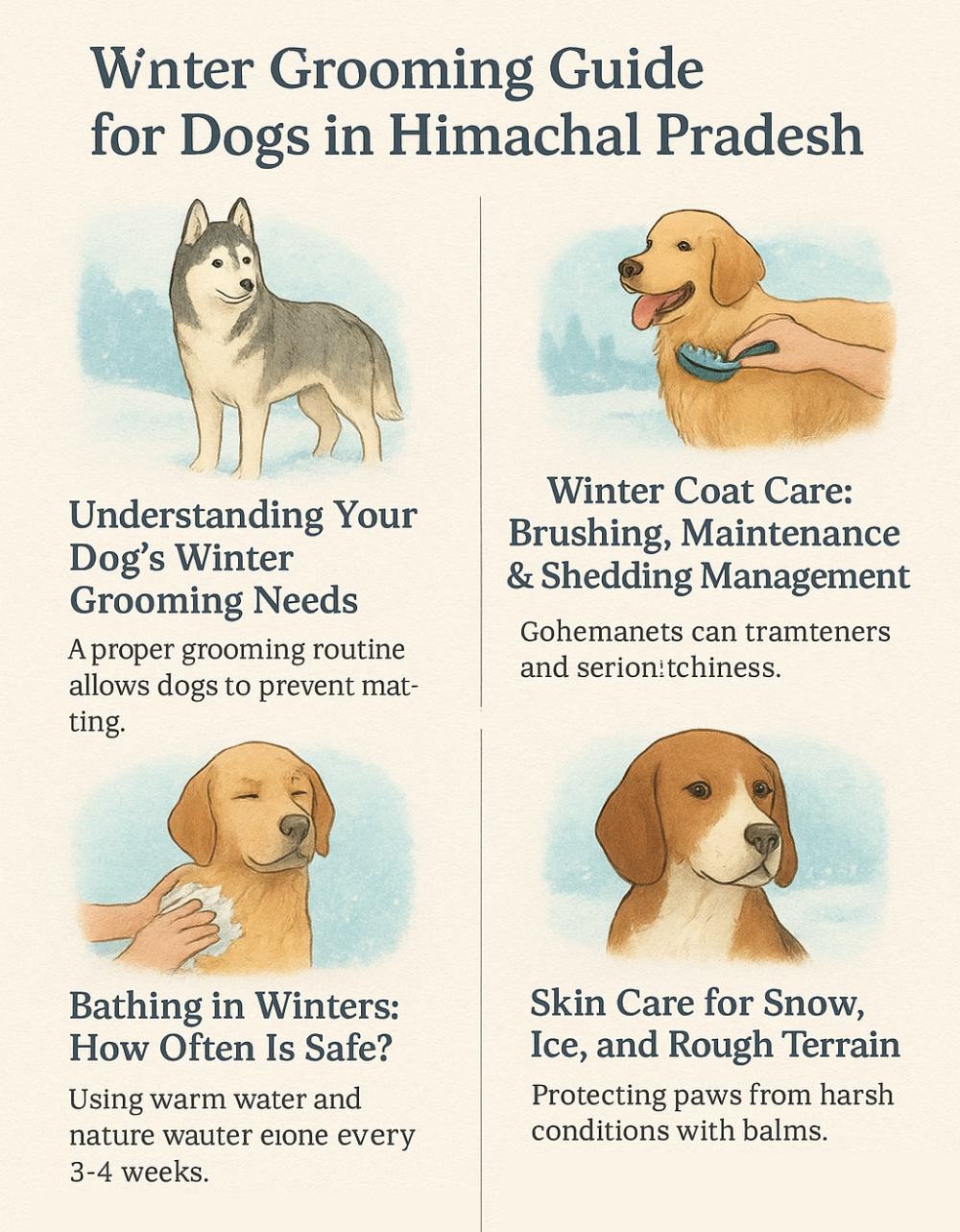
Dogs need baths, but not too often during winter. Over-bathing strips essential oils and disrupts the natural barrier that protects the skin from cold and infections.
Why Limited Bathing Is Better in Winter
Cold temperatures slow the drying process. If a dog remains damp for even 20–30 minutes, it can lead to:
chills
muscle stiffness
cough or cold
skin irritation
Warm Water Is Essential
Hot water may feel relaxing but can damage skin moisture. Lukewarm water is safest, helping loosen dirt without drying the coat.
Post-Bath Drying
This is the most critical part of winter bathing.
Towels should absorb maximum moisture.
Blow dryers must be used on low heat, keeping them at a safe distance.
The undercoat should not remain damp, especially for double-coated breeds.
A well-dried coat helps maintain warmth and prevent winter illnesses.
Skin Care in Winter: Combating Dryness and Irritation
Cold air outside + dry indoor heat = severely dehydrated skin.
Dogs often show signs like:
white flakes
frequent scratching
red patches
dull coat
rough texture
These aren’t diseases — they are reactions to the climate.
Hydration From Within
Omega-3 oils, bone broth, chicken broth, or fish-based diets naturally moisturize the skin.
Topical Moisturizers
Winter-friendly grooming sprays, coconut oil (sparingly), or pet creams help retain moisture without clogging pores.
Dandruff Prevention
If your dog gets winter dandruff, it is a sign of reduced oil production. Gentle grooming, proper nutrition, and a humid indoor environment can significantly improve the condition.
Paw Care: The Most Overlooked Winter Grooming Priority
Paws endure the harshest conditions during winter. Snow, salt, ice, and rough ground can damage paw pads.
Snow Burns and Ice Cuts
Snow can stick between the toes and form ice balls, causing pain. These tiny ice balls are sharp and can tear the skin.
Dryness Leading to Cracks
Cold weather dehydrates the paw pads, forming cracks that bleed.
Paw Balm Protection
A layer of paw balm acts like a shield, protecting from:
salt
hard ice
frostbite
cracks
dryness
Dogs living in snowy areas benefit greatly from regular paw balm application.
Ear Care During Winter
Snow, moisture, and limited ventilation increase the risk of ear infections—especially in floppy-eared breeds like Cocker Spaniels, Beagles, and Golden Retrievers.
Wet ears become warm inside but cold outside, creating the perfect environment for bacteria. Regular ear cleaning keeps infections away and ensures comfort.
Eye Care for Dogs in Snowy Regions
Bright sunlight reflecting off snow can cause irritation. Dust and powdery snow can also enter the eyes. Daily gentle cleaning with a soft, damp cloth removes debris and prevents irritation.
Snow dogs often show redness during extreme weather, making routine eye care essential.
Nail Care: Why Nails Grow Faster in Winter
Reduced outdoor play means nails do not wear down naturally. Overgrown nails affect posture and grip, making dogs slip on tiles, snow, or ice.
Regular trimming prevents accidents, improves walking comfort, and supports joint health.
Winter Grooming Without Frequent Bathing
Cleanliness is not dependent on bathing alone. During winter, dogs can stay fresh through:
brushing
dry cleaning sprays
bathing wipes
coat deodorizers
grooming mitts
These alternatives preserve natural oils while keeping the dog hygienic.
The Role of Nutrition in Winter Grooming
A dog’s health reflects in its coat. In winter, metabolic needs change. Dogs burn more calories to stay warm, so their diet must support coat growth and immunity.
Healthy Winter Diet Includes:
omega fatty acids
eggs
fish
bone broth
warm meals
hydration-rich foods
A nutrient-rich diet keeps the coat thick, shiny, and resistant to dryness.
Creating a Warm Grooming Environment at Home
A warm room makes grooming safer and more comfortable. Dogs feel relaxed, allowing the owner to groom without stress.
A winter-ready grooming space should include:
soft blankets
warm bedding
dry towels
sunlight exposure
heaters used carefully (not directly on dog)
Comfortable surroundings lead to a more pleasant grooming experience.
Behavioral Benefits of Winter Grooming
Grooming does more than maintain cleanliness — it builds emotional comfort.
Grooming helps dogs:
relax
bond with owners
reduce winter anxiety
feel secure
maintain routine when walks are limited
In snowy regions, where outdoor time decreases, grooming becomes a soothing ritual.
Final Thoughts: Winter Grooming Is Winter Wellness
Winter grooming in the Himalayas is not just a routine — it is part of a dog’s survival and comfort. With dry air, snow, and cold winds challenging the coat and skin, dogs depend on their humans for protection and proper care. Regular brushing, moisture support, paw protection, safe bathing, and a warm environment help your furry friend enjoy winter in its full charm.
A well-groomed dog is a warm, healthy, happy dog — ready to play in the snow, explore the mountains, and enjoy the beauty of Himachal all season long.